Monday, May 16, 2016

What Chinese Communism Never Was, and What we Risk in Forgetting what Capitalism Still is


As the Chinese look to try to gloss over the passing of the 50th anniversary of the "Cultural Revolution" it is important for us to to remember a couple of things.

First and foremost is the fact that their Communism, as well as the old Soviet model, or even the Cambodian attempt at same, is not, and never was Socialism. These were efforts towards collectivism at the point of a gun, and were brutally repressive precisely because they were premised not only on "rule by force," but on the intolerance of any competitive thought.

This situation was necessitated both by the fact that these nations did not have the level of technological, or industrial, development that Marx knew would have to be in place so that Socialism would have a chance to work (see Michael Harrington's "Socialism"), but also because of the elevation of an ideology to near religious extremes.

Marx thought that, if you had that level of development in place, that all aspects of the means of production, and distribution, could be put into the hands of the many, or at least into the interests of the many, so that a commercial, commodity, specialized labor, form of organization could be made to be responsive to social equity, and efficacy in terms of continued social development.

The problem there, of course, was two fold. First, that you can't have responsive commercial operations done by bureaucracies, and secondly that controlling the factors of prices, profits, wages as well the distribution of production, cannot be done in isolation. Not at least if you also want to be able to exchange by monetary means with other commercial entities in other nations, and to do so without it being cripplingly burdensome.

All of which is no more than to say that Marx, though quite informed as to the deficiencies of Capitalism, wasn't nearly so appreciative of what had to be the fundamental aspects required to keep it a viable competitive enterprise in the first place. A fact that shouldn't surprise us as he was unaware of the one additional technological development that would make truly socially mandated production possible: the electrification of experience retrieval. This because the whole point of capital's supremacy was it's ability to translate specialized human skill, as a commodity, into other commodities.

The other thing we need to remember, in regards to the Chinese Cultural Revolution, is that Communism has always been in turmoil not only because we, in the West, have worked to actively undermine it, but also because their attempt to have state run commercialized enterprise were always going to be doomed to inefficiency and corruption, for reasons already stated. And as that two sided coin weighed heavy in the pockets of doctrinaire leaders, seducing, and/or demoralizing the rank and file, backlash of one form or another was pretty much guaranteed.

The Chinese have come back, and come back strong, at lease economically, but they have done so at the expense of mitigating once strident adherence to Communist doctrine. They can compete now economically because of this, but it in no way excuses them from the harsh realities of Capitalism's still resplendent deficiencies; bad enough to keep a lid on in countries of only a few hundred million, but in one with over a billion? And where most of those still haven't benefited very much from all of the tremendous change that has been wrought. And because of that the leadership hunkers down ever more repressively to contain the disquiet.

We in the West are tempted to gloat on this certainly but we do so at great risk. This is so not only because a nation of one billion, formed of people pushed into desperation within an interdependent world, with an equally desperate leadership, is absolutely guaranteed to effect us. But also because we in the West have gone on for decades now blithely thinking that Capitalism's deficiencies could be overlooked, or papered over with the odd reform here and there. That we could do this without those deficiencies catching up to us eventually.

This last reality is made more acute precisely because that last technological development that Marx couldn't have anticipated has been working away for years now to make matters far worse. The very thing that would allow us to form an organizational model to put production, management, and distribution into the hands of the people, without governing intermediaries, is now accelerating and warping the old operational model beyond all human ability to control or understand. Hyper competition. Hyper marketing, and decision making in the hands of machines that increasingly program themselves because we can't begin to act or think fast enough any more to even contemplate being involved. Inevitable, despite what the AI community might think, only because of the demands of commercial and competitive imperatives.

In this reality we are headed for our own cultural revolution because the doctrines of "freedom," and "Democracy," cannot hold up against the dictates of ever more competition, commodity production, controlled information flow, consumption, and increasing profit for the few. The human psyche and spirit cannot tolerate it any more than the planet we live on can.



China Is Not Celebrating Cultural Revolution's 50th Anniversary

Sunday, May 15, 2016

We've Spoken of this Delayed Cost Before


Check Back here for a previous mention of this problem.


Dead electronics, which contain toxic materials like lead and mercury and can harm the environment and people, make up the world’s fastest-growing source of waste.

This is What Happens When Profit has Major Influence on Not Only What is A Priority...


...In National Security, but how those priorities are addressed.

Even supposedly fierce competitors get comfortable in their relationship with the government, and each other, so that the bottom line looks really good for every body, except us of course. One could even be forgiven in thinking that, even when an item, like a very expensive new fighter plane contract for example, gets awarded to one team, as opposed to another, they all know where the base line of the bidding ought to start from; and even if the one team loses it still makes money as a sub contractor.

Elon Musk, as a new player in the area of launch vehicles, is to be congratulated in providing much needed "disruption" here as he seeks to take advantage of more nimble ways of doing things. Even as we acknowledge that, however, are we to then conclude from this that Capitalism has been sufficiently "spanked,"  and will sin no more? That, down the road, once Mr. Musk's company, in its turn of being successful, won't come to sit back comfortably in it's own new relationships with other players and the government?

If history is any indicator this would seem something that you wouldn't want to bet on, at least with the hope of having anything even approaching winning odds.

160509_ula_rocket_2_gty_1160.jpg

How Elon Musk exposed billions in questionable Pentagon spending

Ten years after a joint operation of Boeing and Lockheed Martin was born, the FTC’s direst warnings have come true, along with outcomes even the skeptics did not predict.

Thursday, May 12, 2016

Obviously There is Something to Learn here


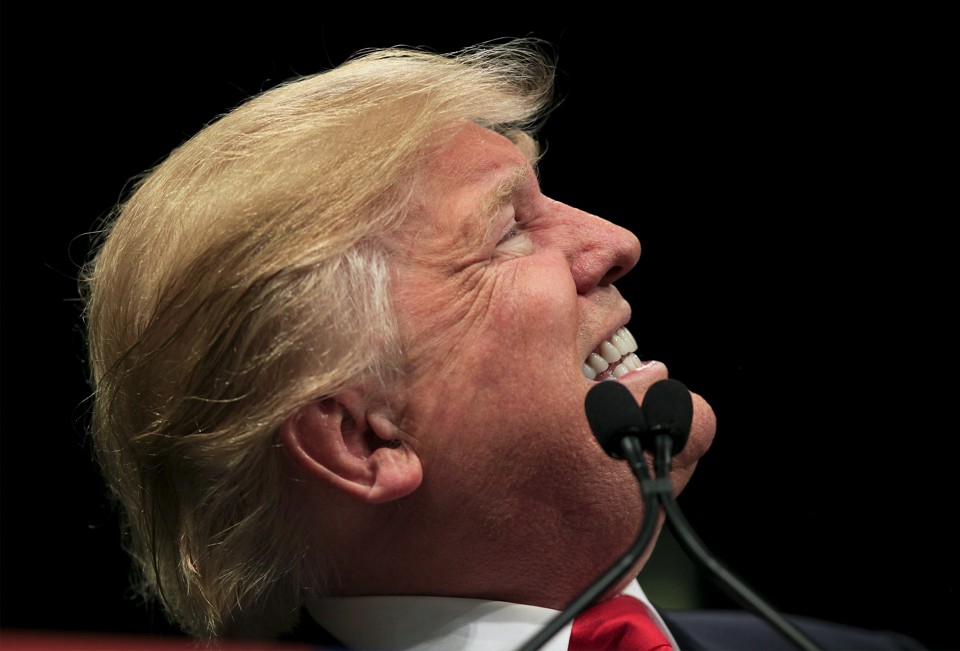
What we're looking at here, with Trump suggesting he won't release his federal tax documents, is nothing more than a trial balloon. The point being to gauge how much worse not releasing will be as opposed to the harm they already know is in store for them with a release.

And the amusing thing here, if you can stand back with a sense of cold pragmatism, is that he probably won't get much flack for not releasing. And why is that you might ask?

Mostly, I think, it is because he's so good at dismissing pretty much any criticism that gets thrown at him with an air of such haughty, and uncaring disdain, that he always gives the impression of not caring at all about what the charge of the moment might be. A characteristic that ties back into his sense of himself, and his power brand, that he's completely above any consequence for whatever lie, misdeed, or shortcoming he's actually responsible for. A disconnect leaping over whatever usual cognitive dissidence mere mortals are subject to that may be so complete as to shield him from any kind of guilt or shame. So much so that you could probably put him on a lie detector and he'd pass the test no matter what he was actually hiding.

Does that make him a sociopath? I certainly don't know. In fact, I'm not sure if having him being a sociopath would be worse than being merely so egotistically enamored with himself that he can pull that disconnect off. At least a sociopath has a chance at being quite logical in his emotional disconnection. But in either case, however, you would surely think having such a person in such a position of power is probably not a very good idea at all.

Unfortunately, when you, as a voter, buy into a brand, your own cognitive dissidence makes thinking objectively about the behavior thus committed to quite problematic. And mores the pity when considered in the context of Democracy as a whole. But then that's the place you put yourself into when you accept that everything is a part of the "hard sell." Ideas. Issues. Legislation, or people. Whatever it might be, to move it forward, you have to sell it. And if you don't care much about collateral damage, you use any means available to make the sale.

'Nothing to Learn': Trump Says He Likely Won't Release Taxes Until After November


Tuesday, May 10, 2016

The Sanders Spending Plan...


...Is a list of things that ought to be done. That part of the Socialist in me is quite clear about that:

"...The massive additional debt represents the net bill for the Vermont senator's proposals to implement a single-payer health-care system, provide generous long-term care services, provide free public college tuition and paid family leave, and expand Social Security..."

And just as clear, the price tag of it all, in terms of what will be added to the national debt, may well have been overstated. The Sander's camp, in fact, had some plausible arguments to make that case:

"...The Sanders campaign had blasted an earlier report from the Tax Policy Center that looked at just the tax impact of Sanders' proposal, saying it failed to take into account the fact that many American households would see their take-home pay go up under the health-care proposal, and that at least 13 million jobs would be created by infrastructure repair efforts..."

and

"...But Sanders campaign policy director Warren Gunnels said the analysis "wildly overestimates the cost of Senator Sanders' health care plan" by falsely assuming state and local governments "will dump all of their health care obligations onto the federal government at a cost of $4.1 trillion over the next decade." Gunnels said Sanders would require those governments to maintain their current health-care spending levels.
Gunnels also said the study "significantly underestimates" savings from reduction in medical paperwork, administration and prescription drug prices that would result from the plan..."
One of the problems with this sort of thing, though is precisely the difficulty in anticipating either the full benefits, or the full costs, of making it happen. We live in an age of increasing market volatility after all, and so much of what goes into making predictions of benefits and costs rests on assumptions that the economy as a whole won't be significantly affected, for good or ill, by other major developments.

For myself, being a pessimist as far as things are likely to happen down the road, and what they'll do to the economy, the hope that other events won't weigh in negatively on the economy as a whole is at least one leap of faith too far beyond reasonable.  

That part of the Libertarian in me also recognizes, however, that it's hard to underestimate the ability of bureaucracies to fully anticipate the complexity of any new enterprise; which, when added to their usual inflexibility to handle new situations, even after they've been identified, can make for bad, if not perfect, storms of inefficient, or even counter productive, effort. You need only look at the implementation of the Affordable Care Act to see how even the best of intentions can take time to find their feet and actually start moving forward.

All of this is no more than to say that there is likely to be another cost factor that will be difficult, to say the least, to properly factor in here. 

What is even more troubling for me in this, however, is that the list of measures to address social equity hardly even begins to address equally important issues of environmental equity; as in, for instance, a carbon tax that starts low, but rises very rapidly, on both production, and consumption of anything related to the CO2 burden in our atmosphere. Even if you could keep the revenue generated isolated to green technology development, and means tested rebates to the most vulnerable consumers, you still face a number of very difficult to anticipate benefits, and costs, to the economy as a whole. The net effect of which even a crystal ball couldn't show you with much certainty. And that's just to address air pollution.

You look at all of this uncertainty, and you maybe even throw in all the negatives that organized opposition will create, fighting the transfer of wealth at every step of the way (because there are actual counters that they can hide, hold on to , or move elsewhere), and you have to wonder why so few are willing to question the much more fundamental issue that's at the core of why what is needed is so difficult to even contemplate: The very fact that it has to be considered within the enveloping context of money and abstract costing at all.

No one seems to want to admit that maybe, just maybe, that the essential characteristics of that enveloping context are themselves the real problem. That the very fact of a cost based mentality, formed of the now questionable connection between human labor as a viable commodity, and the distribution of consumption via the abstract of money, obtained from that labor, ignores what is happening now that electrified experience retrieval makes an effort based economy possible. 

Or, more simply put, that we can use automation, applied with our best interests in mind, to organize ourselves to create, manage and maintain production without money being involved at all. Seeing in fact that, in that context, all it takes is the will of the people, clean energy, and the free flow of information to get done whatever we agree needs to be done.  

Until the intellectual, as well as political, powers that be recognize this much more fundamental problem, we will be continuously mired in the actions at cross purposes that is the hallmark of a cost based economy; a form of organization that emphasizes special interest because greed and profit are so often a zero sum game.


Monday, May 9, 2016

Just Breath Taking Stupidity


You really have to take a step back and wonder at the lack of thought, or consideration, about the full consequences of his actions here. He bullies his way forward, so full of his own sense of "brand" power that all opposition will fall before him. And, just as he had no clue about what would happen because of his ignorance of his own party's caucus rules, and had Cruz kick his ass for it in several contests, when he enters the White House, should he win the election, what do you suppose will become of any legislation he might propose.

It would be bad enough, certainly, to face the usual Republican, Democrat wall of intransigent compromise, but to come into that legislative fray with neither party willing to work with you? To create, in effect, a third tangent of disagreement?

What is really sad here, however, is the fact that the people voting for him now take even less time to think about what they are doing, and the consequences of their actions. And all because they bought into an empty package of tough talk, bluster, and easy pandering to the anger that permeates through this country right now. I've seen buyer's remorse before following an election but what's coming here, if this idiot wins, is going to be virtually nothing in comparison. Everyone will be pointing fingers. No one will be taking responsibility, and the anger will just get worse.

So much to look forward to.


Donald Trump to GOP: We don’t need to be unified

See Also:


Mr. Trump’s warning was his latest affront to Republicans who have urged him to adopt a more cooperative and unifying tone. And it amounted to an extraordinary escalation in tensions between the party’s presumptive nominee and its highest-ranking officeholder.

See Also:

Donald Trump's Economic Plans Would Destroy the U.S. Economy

Make America have a recession again.

Sunday, May 8, 2016

Take Numbers Like These With a Grain of Salt


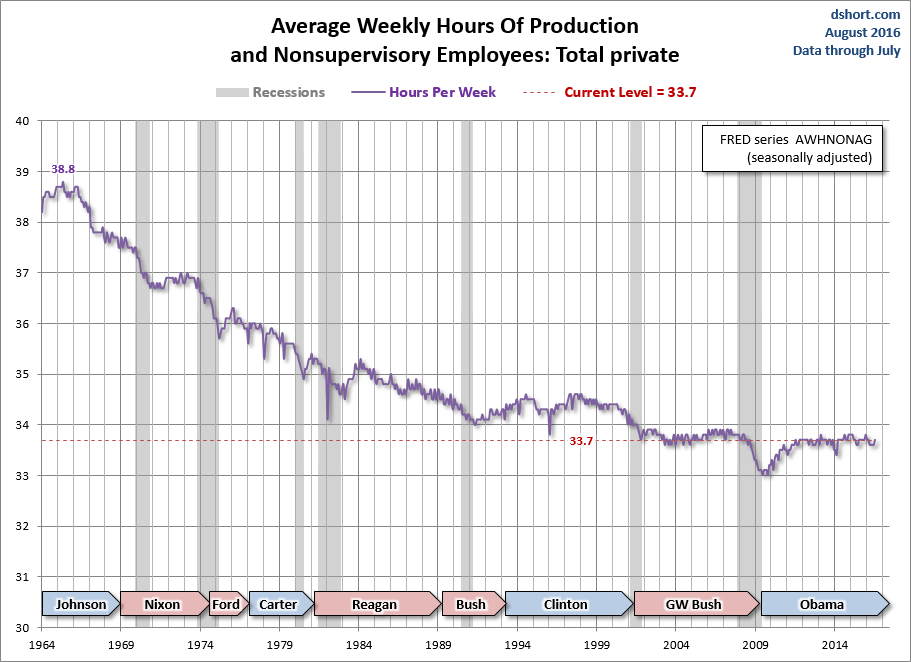
Just as a momentary slow down in job growth over all doesn't necessarily mean things are now bad, so to does a momentary up tic in average wages not necessarily mean things are improving; especially as it might relate to an improvement overall for middle class wage earners.

One thing that the average value here in wages doesn't include is average hours actually worked per week. It's one thing to have a nominal hourly rate increase, but quite another if you are still working only part time. A factor that gets further skewed if you consider that part time may also be denying you full medical coverage; so your effect wage, as opposed to the current cost of living, may not be so great after all.

You need only look at a chart of how actual hours worked per week has fared (up to March of this year) to see that this may still be not so great.

And the other thing, of course, is that so many of those getting better wages, even if they are full time, are only temp workers to begin with; who, again, may, or may not, get full medical coverage. A factor that, in itself, further indicates that what is in effect this moment may have nothing at all to do with what will pertain to the next moment. Which is only another way to say that market volatility will be a way of life for more and more of us.

Weekly Hours

Labor Trade Off: Growth Slows, But the Quality of Jobs is Improving

by MARTHA C. WHITE

See Also: